Windsurf: Downfall, Rescue, and Billions of Dollars
Published on
If you listen to the IA Sob Controle podcast you’re already in the loop, but in the last few weeks one of the craziest stories I’ve seen in the world of AI (and business) in recent years went down, at the cinematic level of Sam Altman’s firing/redemption (@sama).
It all started a few months ago with news out of nowhere: OpenAI offered $3 billion to buy Windsurf, a code IDE startup that competes with Cursor and the others that have popped up. The team was already celebrating the acquisition and the accelerated vesting, planning the mansions and yachts they’d buy. But then Microsoft showed up to spoil the party.
In that legendary contract where Microsoft owns 49% of OpenAI’s profits and backs them with money and infrastructure, there was a clause giving it rights over the intellectual property of any OpenAI acquisition. Since Windsurf is a direct competitor of GitHub Copilot (Microsoft’s), they vetoed the deal to protect their interests.
So far, so good, offers fall through all the time. But the story gets even weirder. With the deal dead, I imagine Windsurf’s leaders were extremely disappointed (to say the least).
That’s when Google came onto the scene OUT OF NOWHERE, and in a way I’d never seen before. They didn’t buy the company the way OpenAI wanted to, but did a “talent extraction”. They hired ONLY the founders and the top 40 engineers for $2.4 billion. The owners went for it, became employees again, and left the other 250+ employees, the product, and the entire rest of the company behind. Surreal.
You can understand Google’s side. Windsurf was already a fairly big startup, and they don’t need yet another sales team, HR, legal, etc. In 2025, when AI Engineers are being hired for bigger numbers than soccer players (see the cases of Meta paying up to $200 million to bring in Apple’s AI leader, among others for smaller but still million-dollar amounts), what matters is the company’s “brain”.
Abandoned, the other 250+ Windsurf employees didn’t know what the future of the company would be. But in the middle of all this confusion, a “savior” showed up: Cognition (yes, the Devin one). In an all-stock deal, they took the team that was left and, most importantly, the “FedRAMP High” certification, which is basically a golden passport for closing contracts with the US government, something they didn’t have.
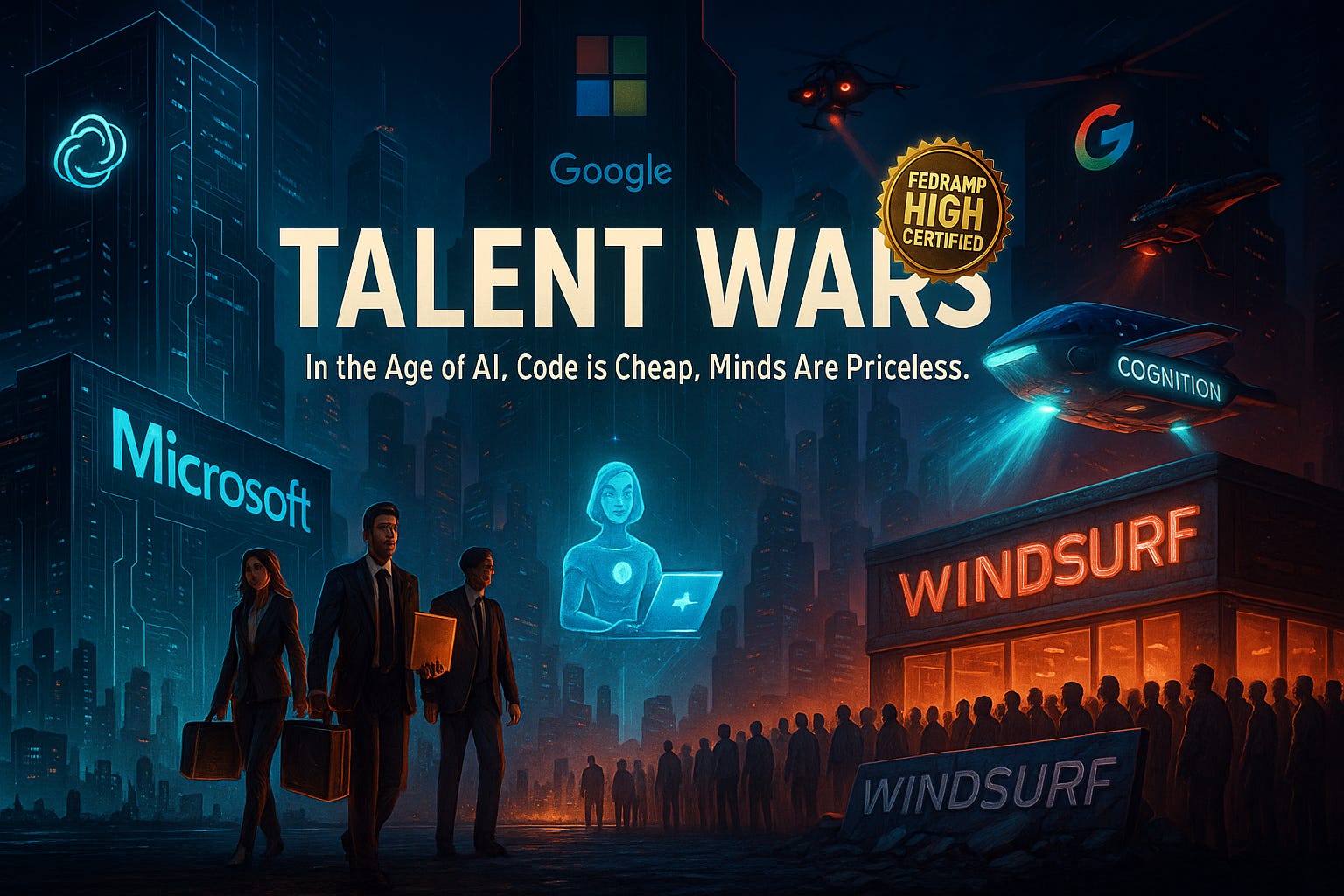
This bizarre saga shows how the absurd amount of money in AI right now is breaking all the rules of the game. We have founders literally abandoning their projects and their own team in exchange for a fortune, and a market so hot for specialists in the field that million-dollar figures start to make sense.
In the AI war, the main asset is no longer the products, but the talent of the people behind them. And the giants are willing to do ANYTHING to get that talent.