GPT-5 Is Here!
Published on
And GPT-5 is finally here! OpenAI just did the most anticipated livestream of 2025.
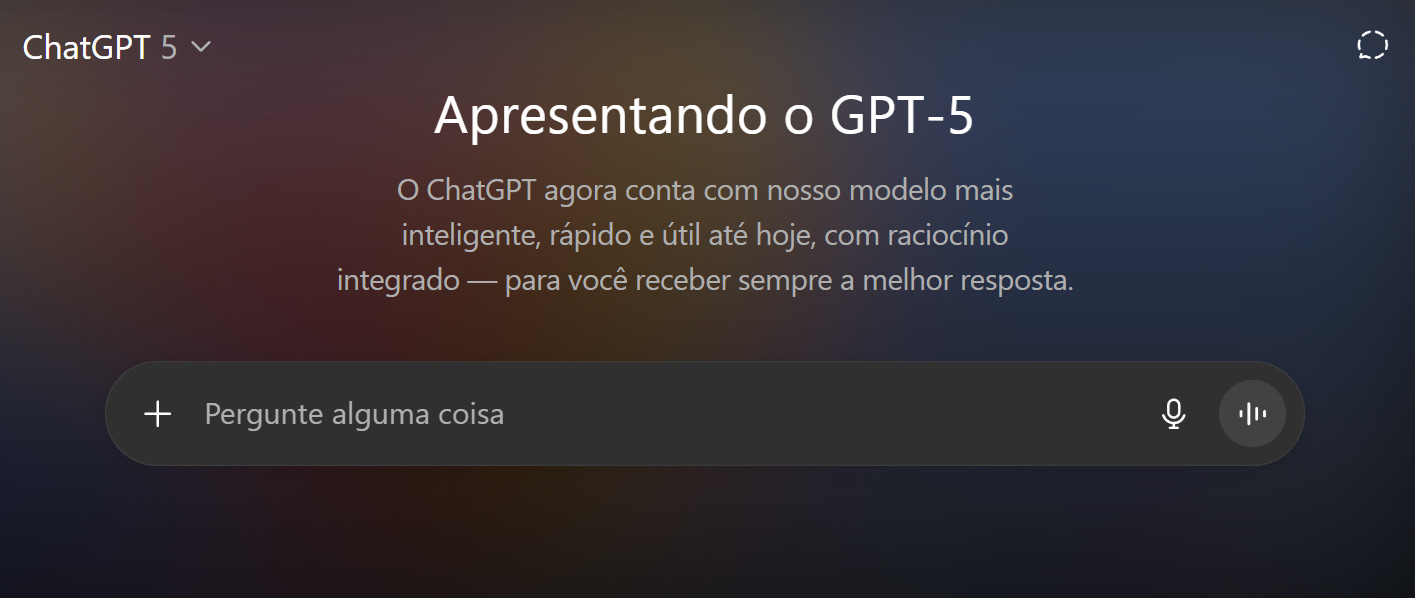
The main concept, which we had already talked a lot about on IA Sob Controle, is “One model to rule them all”. They wanted (for good reason) to put an end to that mess of having to choose between GPT-4o, o3, o3-mini, o3-mini-high, o3-mini-high-2-electric-boogaloo, etc.
Now, GPT-5 is a single model that decides on its own whether the task calls for a quick answer or deeper, slower reasoning. With that, all the previous models (GPT-4o, o3, o4-mini, etc.) will be officially discontinued, which simplifies life a lot for developers and end users alike.
In practice, we’ll have three new models in the API: the standard GPT-5, GPT-5-mini (focused on cost-effectiveness), and GPT-5-nano (focused on low latency).
The livestream was pretty long (over 1h) by their standards, and very marketing-heavy (normal), but they presented several very interesting benchmarks. In short, GPT-5 is the new state of the art, and beats all the others (o3) by a few % on most benchmarks, still losing on one or two (like to Grok 4 Thinking on ARC-AGI-2).
For me, what impressed me the most in the livestream was the demo where the researcher asked GPT-5 to create a French-learning app for his girlfriend in the style of Duolingo, complete with flashcards, a quiz, and a little snake game. The model generated all the code, including a beautiful front-end (which was a big problem with the last few GPTs), and what got me the most: it also generated the French voice for the words. So, when you click on the word “le chat” (the cat), the app spoke out loud, in French. THIS WAS GENERATED IN 2 MINUTES ON A LIVESTREAM. It really blew me away.
Another great piece of news is the promise of a drastic reduction in hallucinations. OpenAI claims GPT-5 is 45% less likely to make factual errors than GPT-4o when searching the web, and the focus on medical benchmarks was also highlighted quite a bit. Since everybody uses GPT to ask “What is this spot on my skin?”, it’s great that it doesn’t hallucinate on those health benchmarks.
The AI community’s reaction seems to be a mix of impressions. On one hand, everyone understood that the model’s capability is great, especially in the coding demos, with this big focus on the front-end and on unifying the models, which was very well received. On the other hand, a lot of people see GPT-5 as the open admission that we’ve hit a plateau, with improvements of a few %, and not the revolution some expected or one that would shift the paradigm the way GPT-3 or GPT-4 did at their launches.
Overall, it was a pretty cool launch. It looks like an excellent model, with great API prices and welcome improvements. It wasn’t the arrival of AGI that some predicted, but it’s a solid step in the right direction.
As a friend of mine said, the launch was neither “overwhelming” nor “underwhelming”… it was “whelming”.